Backseat Offroad Low Range and Diff Lock Guide
Crawl gears and lockers explained for climbs, rocks, mud, and controlled descents.
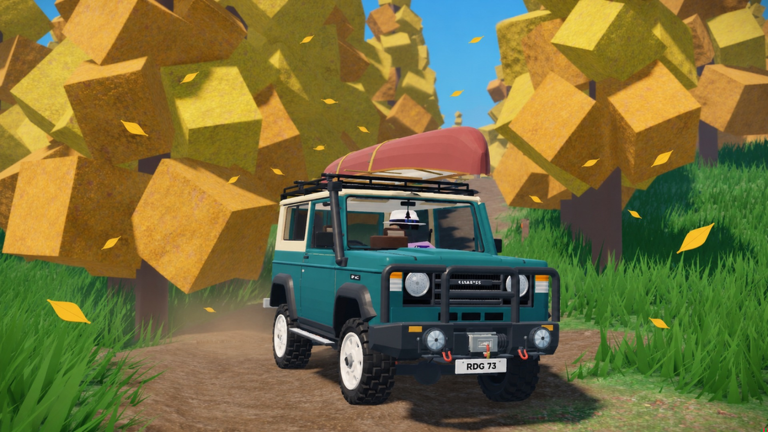
Backseat Offroad builds its fantasy around old 4x4s that actually behave like trail trucks: low range for torque and control, and differential lockers for moments when one wheel loses the ground. If you only drive in a high/auto feel and never touch lockers, the snowy summit will feel unfair. If you leave everything locked forever, forest roads will feel clumsy. This guide teaches when to engage each tool, when to shut them off, and how they combine with winching and upgrades.
Confirm your toggles in the in-game settings first—see Controls. Similar Roblox crawlers often expose low modes (sometimes labeled L / L+) and a locker key (often K), but your binds may differ.
What low range actually does
Low range is a crawl gearing concept. It slows wheel speed for a given throttle input and multiplies the sense of torque so the truck can inch up steep grades without frantic wheelspin. It also helps on descents: you can creep down rock steps with less reliance on panicked braking.
Use low range for:
- Steep dirt or snow climbs where high range only digs ruts.
- Rock gardens that punish sudden tire speed.
- Off-camber shelves near cabins and viewpoints.
- Controlled descents into riverbanks before a crossing.
- Any recovery where a winch is already sharing the load.
Avoid living in low range on gentle lakeside roads. You will crawl slower than needed and may heat your patience more than the tires.
What differential lockers do
An open differential sends power down the path of least resistance. When one wheel lifts on a rock or sits in gooey mud, that wheel can spin uselessly while the wheel with grip receives little torque. Locking the differential forces the axle’s wheels toward turning together, so the tire with bite can push.
Engage lockers when:
- You see a diagonal axle twist—one front and one rear unloaded.
- Mud or snow lets a single tire excavate a hole.
- A ledge climb keeps lighting up one side in the air.
- A friend is spotting and calls that your inside tires are spinning free.
Disengage lockers when:
- You return to high-traction dirt or packed trail and need tighter turning.
- You are navigating dense trees where understeer would kiss bark.
- You finished the obstacle and the next kilometer is a transit road.
Climbs: a practical sequence
- Stop short of the steep section and read the line with the camera.
- Shift to low range before you need it—do not hunt modes mid-wheelspin.
- Approach with steady throttle, not a launch.
- If a tire unloads, toggle diff lock while still moving slowly if the game allows engagement at crawl speed.
- Keep steering inputs small; locked axles push wide.
- Crest gently, unlock on the flat, and only then consider higher range for transit.
This sequence matters even more toward the snowy summit and alpine village grades covered in Hidden Places.
Rocks and ledges
Rock shelves create the classic crossed-up axle. Low range keeps each tire contact deliberate. Lockers keep the planted tire working. If you bounce and catch air, ease off—impact plus throttle is how trucks pivot onto their sides. Sometimes the correct move is to reverse one meter, change the attack angle by a tire’s width, and retry. Stubbornness is not a drivetrain mode.
Mud and soft soil
Mud rewards momentum discipline. Too little and you sink; too much and you dig. Enter in low range with lockers ready. If you bog, stop digging, winch to a tree or friend, then retry with a fresher line. Tire upgrades and lifts from Vehicle Upgrades help clearance, but they do not delete physics.
Descents and engine braking feel
Point downhill in low range so the truck creeps instead of freewheeling into a lake. Steer toward the fall line when possible; side-hilling with lockers engaged can feel lively. If a descent feeds into water, combine this page with Canoe and Water so you are not locked, pointed wrong, and flooded at once.
Pairing with the winch
When stuck:
- Stop the useless spin.
- Confirm low range.
- Engage lockers if a wheel is unloaded.
- Attach a winch to a sound anchor.
- Pull and steer together.
- Unlock and disconnect after you are free.
Full cable technique lives on Winch Recovery. Modes without a winch plan still fail on cliffs; winches without modes still shred soft ground.
Common myths
- Myth: Lockers always equal more grip. Reality: They redistribute torque; they do not invent friction on ice-smooth stone.
- Myth: Low range is only for climbs. Reality: Descents and technical crawls love it too.
- Myth: Leave everything locked forever. Reality: You will understeer and fight the truck on transit trails.
- Myth: Hardware deletes the need for modes. Reality: Engine swaps and lifts help, but line choice still rules—see Vehicle Upgrades.
Practice drills
Spend a session in the forest band from Getting Started:
- Climb the same hill in high/auto feel, then in low range. Compare wheelspin.
- Find a rock that unloads one tire. Climb once without lockers, once with.
- Descend a short ledge in low range focusing on calm steering.
- Mud a shallow puddle with lockers on, then unlock on exit.
- Combine a tiny intentional stick with a winch while locked and in low range.
Co-op callouts that help
Agree on short phrases: “low,” “lock,” “unlock,” “winch,” “stop.” Spotters should watch tire contact, not only the hood. On public servers near peak population, clear callouts prevent five people from giving five contradictory tips.
When to read other guides next
- Inputs unclear → Controls
- Stuck despite modes → Winch Recovery
- Water after a descent → Canoe and Water
- Need more clearance or breathing intake height → Vehicle Upgrades
- Looking for a goal beyond “go up” → Hidden Places
- Hub index → Guides Hub
Closing
Low range is how you ask the mountain politely. Diff lock is how you keep a planted tire honest when its partner is in the sky. Use both with intention, unlock when the trail forgives you, and you will spend more time sightseeing from viewpoints and less time digging graves with spinning wheels. Crawl smart—and when the summit finally feels fair, you will know why.
Frequently Asked Questions
Quick answers for crawls, winches, and co-op trails.
Should I climb the summit in high range?
Usually no. Steep snow and rock reward low range for control. Use higher range for gentle transit roads between obstacles.
When should I turn diff lock off?
Turn it off on firmer, grippy trails where you need tighter turning, and after you clear the obstacle that required it.
Do lockers help in mud?
Yes when one wheel is spinning freely. Combine with low range, and winch out if you start digging instead of moving.
Are the keybinds the same for every player?
Not necessarily. Check the in-game keybind settings. Similar Roblox 4x4s often use K for lockers and mode selectors for low range.