Winch Recovery in Backseat Offroad
Hook a tree or a friend's 4x4 and escape mud, rocks, and high-centered shelves.
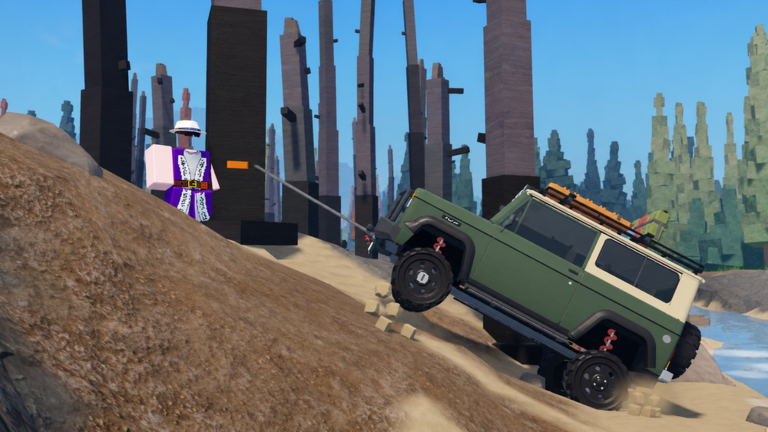
Sooner or later every Backseat Offroad crawler gets stuck. A tire drops into a hole, an axle rests on a rock, or soft mud swallows momentum. The winch is your reset button that still feels earned: attach to a solid tree or a friend’s 4x4, pull along a smart line, and roll free without abandoning the run. This guide teaches recovery habits that match the game’s co-op mountain fantasy—no timer, no race, just problem solving with cable and patience.
New players should finish Getting Started and skim Controls so winch prompts and binds are clear. Pair this page with Low Range and Diff Lock because most recoveries work better when wheel speed is controlled.
What the winch is for
Use the winch when:
- You are high-centered and throttle only digs you deeper.
- One side of the truck hangs off a ledge and tires cannot bite.
- Mud or snow packs around the axles after wheelspin.
- A climb fails and reversing is blocked by terrain behind you.
- A friend is stuck below and you can stage on firmer ground above or beside them.
Do not treat the winch as a shortcut past every obstacle. If a mild hill only needs low range, fix the driving line first. Cable saves the moments when physics has already won.
Anchor types: trees and friends
Trees are the classic solo anchor. Look for sturdy trunks within cable reach and roughly in line with the direction you want to travel. Sideways pulls can roll a light 4x4. Aim the cable so the truck slides toward freedom instead of into a worse ditch.
Friends’ 4x4s turn recovery into co-op theater. The helper should park on high-traction ground with their own brakes set and, if needed, lockers engaged so they are not dragged downhill. Communicate before spooling: who pulls, who steers, who calls stop. With servers holding around twenty players, public lobbies often help strangers—return the favor.
Step-by-step solo tree recovery
- Stop spinning. More throttle in a hole usually digs graves for the tires.
- Shift into a controlled mode—typically low range—so any assisted movement stays slow. Details: Low Range and Diff Lock.
- Survey anchors with the camera. Pick a tree ahead of the stuck vector when possible.
- Attach the winch using your confirmed control bind (see Controls).
- Take cable tension gradually. Watch whether the chassis lifts, slides, or tips.
- Steer toward the freer line while the winch shares the load.
- The moment tires grip, ease winch pull and drive out under power.
- Disconnect promptly so you do not drag a hooked tree into the next corner.
Step-by-step friend recovery
- Stuck driver describes the problem: high-center, mud, cliff, flooded exit.
- Helper approaches from a safe vector and parks with an escape path.
- Agree on pull direction. Straight pulls beat diagonal yanks that roll trucks.
- Attach bumper-to-bumper or bumper-to-recovery point as the game allows.
- Helper holds position; stuck driver steers and adds gentle throttle.
- If the helper starts sliding, stop, reposition, or add a tree as a second anchor when available.
- After freedom, clear the trail so other players can pass.
Line choice beats raw pull power
A winch is only as smart as its geometry. Ask:
- Will this cable pull me onto a rock tip-over?
- Is the anchor uphill or downhill of my center of gravity?
- Can I winch to a mid-point ledge, rest, then re-hook higher?
- Should I reverse-winch to unload a pinned bumper before climbing again?
Multi-stage recoveries are normal on the way to the snowy summit. Pull to the next safe shelf, reset, and continue. That mindset matches exploration goals in Hidden Places where cabin spurs are narrow and unforgiving.
Combining winch with lockers and upgrades
Engage diff lock when one wheel is unloaded so powered wheels share torque as the cable helps. Stay in low range so you do not surge into the obstacle. If you repeatedly flood intakes on river exits, consider snorkel and lift options from Vehicle Upgrades and water tactics in Canoe and Water. Hardware does not replace technique, but it widens the margin for error.
Mistakes that make stuck worse
- Yanking full power with the wheels steered into a tip.
- Hooking a skinny sapling that cannot hold.
- Pulling a friend while their truck faces a cliff edge with no spotter.
- Forgetting to unlock steering-heavy lockers after escape.
- Chat-arguing mid-slide instead of calling a clear stop.
- Resetting instantly and never learning the recovery—next ledge will feel identical.
Practice course near the trailhead
Spend ten minutes in the lakeside forest:
- Intentionally high-center on a mild rock (carefully).
- Winch to a tree and escape.
- Have a friend tug you a few meters on flat ground to learn cable feel.
- Try a short uphill assist where the helper stays on gravel.
- Disconnect and drive a clean loop without dragging cable.
Repeat until the prompts feel boring. Boring recoveries are safe recoveries when you finally reach alpine village switchbacks.
Co-op etiquette
- Ask before hooking a stranger’s truck.
- Do not grief by yanking people off cliffs.
- Leave room on narrow shelves for others to pass after a save.
- Share upgrade tips instead of gatekeeping lines.
- Point newcomers to the Guides Hub if they are still learning binds.
When winching is the wrong tool
If you are simply in the wrong gear on a climb you can still reverse, downshift to low range, and retry. If water is the problem, read depth and snorkel needs first. If you are lost, open Hidden Places for exploration structure rather than winching randomly into denser forest. Check Updates if a patch changes winch range or attachment rules.
Closing mindset
The mountain is supposed to stick you sometimes. That is the joke and the joy of Backseat Offroad. A clean winch recovery—tree or friend—turns failure into a story you tell in chat. Verify your binds, plan the cable line, combine low range with lockers, and keep crawling. For the next skill gate, jump to Low Range and Diff Lock or harden your truck via Vehicle Upgrades.
Frequently Asked Questions
Quick answers for crawls, winches, and co-op trails.
Can I winch to another player's 4x4?
Yes. Friend vehicles are valid anchors. Park the helper on firm ground, agree on pull direction, and use slow, controlled tension.
What if there is no tree nearby?
Call a friend for a vehicle-to-vehicle pull, reverse to a previous anchor if possible, or stage a multi-step retreat to firmer ground.
Should I keep throttling while winching?
Use gentle throttle in low range while the cable shares the load. Full throttle often digs tires deeper or tips the chassis.
Does winching replace low range and lockers?
No. Winching recovers a failed line. Low range and diff lock help you complete the next attempt with better traction control.