Backseat Offroad Map Zones
Elevation bands from lakeside forest to snowy summit—and how to route a calm session.
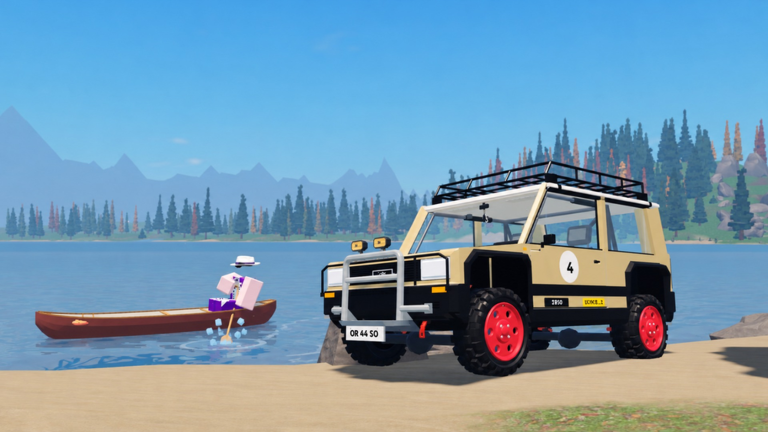
Backseat Offroad is one continuous Roblox mountain, not a menu of race tracks. There is no timer and no forced podium route. You still need a mental map. This Map Zones guide splits the climb into elevation bands—lakeside forest, rivers and water, mid-mountain shelves, alpine village approaches, and the snowy summit—so you can plan sessions that match your skill, friends, and truck setup.
The experience is free, built by No crash plez (owner Fifth_5), and launched 14 October 2026. Five old 4x4s with low range and diff lockers share roughly twenty-player servers. About one hundred hidden places reward curiosity. Use this page with Getting Started if you are new, and with Snow Summit when the white band is tonight’s goal.
Why think in bands
Treating the map as one blob encourages bad plans: spawn, floor it uphill, high-center, rage-reset. Bands give you gates.
- Warm up where mistakes are cheap.
- Practice systems (winch, lockers, fords) before snow punishes them.
- Schedule turn-backs so the descent is not a midnight panic.
- Match upgrades to the hardest band you will actually touch.
Print a simple order for voice chat: Forest → Water check → Mid → Alpine approach → Snow decision.
Band 1 — Lakeside forest
The lakeside forest is the classroom. Grades are softer, trees are plentiful winch anchors, and dirt loops forgive bad steering. Spend your first minutes here every session—even as a veteran—because it confirms binds, camera feel, and whether a patch nudged traction.
Do here:
- Verify throttle, steering, low range, locker, and winch binds (Controls).
- One intentional mild stuck + tree recovery (Winch Recovery).
- Short low-range hill without wheelspin (Low Range and Diff Lock).
- Spot a cabin spur or viewpoint without committing the whole night (Hidden Places).
Avoid here: treating forest roads like a highway. Speed only teaches you how fast you can flip into a stump.
Band 2 — Rivers and water edges
Water is not scenery. River crossings, lake shelves, and canoe docks change risk math. A pretty ford can hide a soft exit bank that strands an axle.
Do here:
- Scout depth with the camera before the bumper kisses water.
- Decide whether tonight needs a snorkel mindset from Vehicle Upgrades.
- Read Canoe and Water if paddling or deep fords are on the agenda.
- Stage a friend on the exit bank when the crossing looks sketchy (Co-op Winching).
Avoid here: racing bow waves for clips, then wondering why the intake drank half the creek.
Band 3 — Mid-mountain shelves and rock
Mid elevations mix rock steps, off-camber dirt, mud pockets, and spur trails to cabins. This is where locker discipline starts to matter and where most “we thought we were ready for snow” groups discover they were not.
Do here:
- Engage lockers when a wheel unloads; unlock for tighter turns on grippy ground.
- Break climbs into shelves: stop, breathe, re-aim.
- Keep one truck on firmer ground while another probes.
- Log landmarks so reconnects after a disconnect have a meeting point.
Avoid here: leaving diff lock on forever “just in case,” then understeering into trees on every switchback.
Band 4 — Alpine village approaches
The alpine village area is a mid-to-high exploration payoff: denser props, photo spots, and routes that tempt you off the main dirt. Treat approaches as navigation puzzles, not sprint lanes.
Do here:
- Slow camera scouting before committing into narrow alleys between buildings or rocks.
- Hunt with Hidden Places habits—curiosity over speed.
- Agree in chat whether coordinates are spoilers for public servers.
- Use the village as a go/no-go gate for snow: if the group is already tired or messy on rope, turn back.
Avoid here: three trucks nose-to-tail in a one-lane gap with no reverse plan.
Band 5 — Snowy summit
Snow is the final exam. Traction lies, descents punish ego, and winch staging becomes mandatory on serious lines. Do not invent a new driving personality at the white line—bring habits from lower bands.
Deep technique lives on Snow Summit. Build priorities for climb nights sit on Climb Builds and Vehicle Upgrades.
Minimum entry checklist:
- Low range feels automatic.
- Someone can call Anchor / tension / stop without arguing.
- Winches tested in forest tonight, not “probably fine.”
- Turn-back time spoken out loud.
- Trail Checklist boxes ticked for a summit gate.
How to route a session (templates)
Ninety-minute public night
- Forest warm-up (10)
- One water or mid-mountain skill focus (25)
- Cabin or viewpoint loop (25)
- Optional snow sample only if clean (20)
- Descent + debrief (10)
Focused co-op summit attempt
- Full Trail Checklist in garage
- Forest winch drill (10)
- Efficient climb through mid bands—minimal sightseeing
- Alpine approach as staging area
- Snow push with fail budget (example: three crux tries)
- Patient descent
Exploration / photo night
Stay in forest through alpine village. Skip summit pressure. Fill notebooks via Hidden Places and paddle if the lake calls (Canoe and Water).
Linking systems to geography
| Zone need | Wiki page |
|---|---|
| First hour | Getting Started |
| Binds | Controls |
| Stuck | Winch Recovery |
| Torque / bite | Low Range and Diff Lock |
| Fords / canoe | Canoe and Water |
| Cabins / POIs | Hidden Places |
| Parts | Vehicle Upgrades |
| Snow exam | Snow Summit |
| Pre-trail routine | Trail Checklist |
| Patch changes | Updates / November 2026 Notes |
Busy-server geography tips (post-surge)
After the November visit surge (~1.3M+ visits, multi-thousand CCU peaks), popular bands clog. Leave pull-offs clear. Do not block alpine alleys for screenshots. Help strangers once, then move—karma keeps the mountain friendly on ~20-player servers.
Common routing mistakes
- Skipping forest warm-ups because “we know the game.”
- Planning summit + canoe + twenty cabins in one evening.
- Arriving in snow without a tested winch.
- Ignoring Updates after a Roblox stamp, then blaming the truck.
- Chasing unverified scripts or fake codes instead of learning bands (Scripts, Codes).
Closing
Map zones turn a huge open Roblox mountain into a set of honest gates. Crawl the lakeside forest until boredom, respect rivers, earn mid-mountain shelves, use the alpine village as a decision point, and only then take the snow exam. Watch the mid-article gameplay for pacing inspiration, then build your own route. When you are ready for white traction details, open Snow Summit and keep the Guides Hub bookmarked for every system link above.
Frequently Asked Questions
Quick answers for crawls, winches, and co-op trails.
What are the main map zones in Backseat Offroad?
Think in elevation bands: lakeside forest, rivers and water edges, mid-mountain shelves, alpine village approaches, and the snowy summit.
Should new players go straight to the summit?
No. Warm up in the forest, practice winch and lockers mid-mountain, then treat snow as an exam. Start with Getting Started and this zones guide.
Where does the alpine village fit?
As a high exploration band and a practical go/no-go gate before committing to serious snow lines.
How do I plan a short session with these zones?
Pick one skill band plus one exploration goal. Use the ninety-minute template above and keep a spoken turn-back time.